


Hachi Quilts
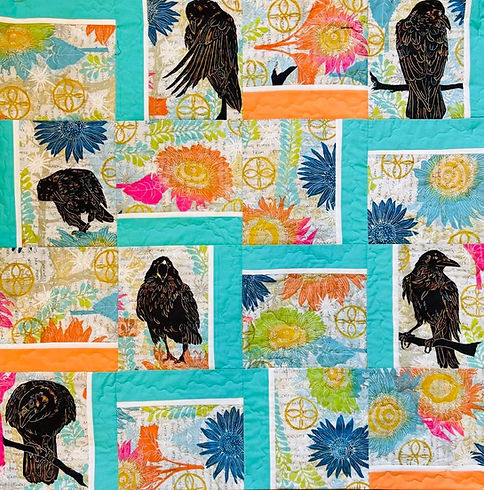
Hachi quilts (often referred to as Japanese Hachi-style quilts) is an improvisational quilting method adapted by author and quiltmaker Patricia Belyea. Rooted in the Japanese philosophy of wabi-sabi—finding beauty in imperfection—this style is celebrated for its playful, rule-breaking approach to patchwork. [1]
Hachi quilts are defined by five characteristics:
-
The Eight Factor
-
The "Unexpected Visitor"
-
Global Textiles
-
No Rules Improv
-
Unique Finishings

The Defining Characteristics of
Hachi Quilts
THE EIGHT FACTOR
The quilts use 8-inch square blocks, arranged to in larger, striking graphic layouts. The blocks are made in fractions of 8 (like 2-inch and 4-inch pieces) The Japanese Kanji character for the number eight is "hachi,," 8 being the Japanese symbol for good fortune.
THE "UNEXPECTED VISITOR"
Hachi quilts purposefully incorporate one or two distinct, quirky blocks or novelty prints that stand out from the main color palette, adding a playful pop of personality.
The Defining Characteristics of
Hachi Quilts (continued)
GLOBAL TEXTILES
The quilts frequently use authentic, vintage Japanese fabrics like yukata (summer cottons) and boro--but they don't have to. Any scraps will do.
NO RULES IMPROV
The piecing is highly improvisational, meaning quilters don't have to stress over perfect matching points.
UNIQUE FINISHES: Instead of a traditional folded binding, Hachi quilts are usually finished with yarn ties or an end-cap facing and often accented with hand-running stitches along the block frames. [1] [2]
